Airbus’s £150 million investment in a new A321 wing production line at Broughton is another sign of the scale of the industrial challenge taking shape across aerospace.
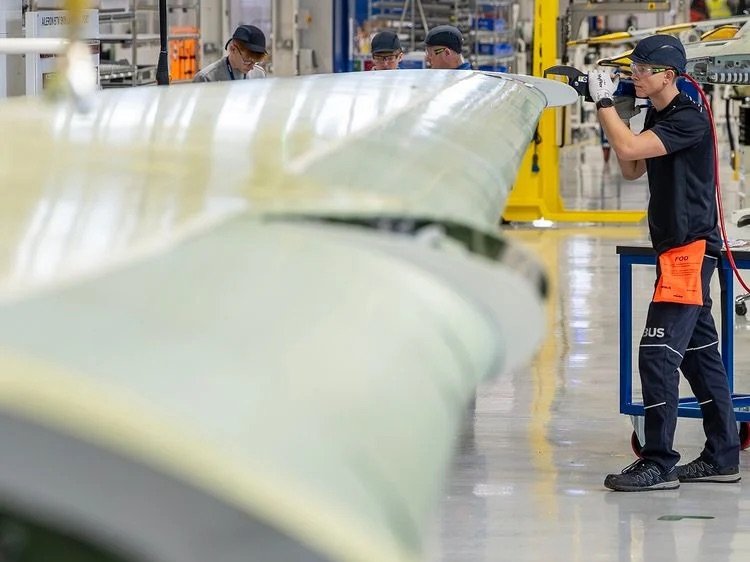
The aircraft manufacturer is converting the former A380 wing production facility into a dedicated A321 line as it builds towards its planned production rate of 75 A320 Family aircraft per month. Six production jigs are expected to be operational by the end of 2026, alongside an equipping line and paint shop, with the investment supporting 480 new jobs at Broughton.
For the UK supply chain, rising aircraft output brings a corresponding requirement to increase the pace at which parts, processes and production capability can be qualified.
AddQual Managing Director Ben Anderson believes this makes qualification capacity an increasingly important part of the aerospace ramp-up.
“Production capacity gets a lot of attention when aerospace rates increase, because you can see the machines, facilities and people being added,” said Anderson. “Qualification capacity has to grow alongside it. Every additional component and production process brings inspection, verification, documentation and engineering activity with it.
“The question for manufacturers is how they organise that work efficiently when programmes are moving faster and engineering resources are already stretched” explains Ben.
The scale of the A321 programme illustrates the point. Airbus has said around 75% of its backlog of approximately 7,500 A320 Family aircraft is made up of A321s.
Higher rates flow through an extensive network of manufacturers responsible for delivering parts and assemblies to tightly controlled aerospace requirements. Each organisation has its own mix of engineers, inspectors, metrology equipment and specialist processes, all working within finite capacity.
This is the operational problem AddQual has been addressing through ATLASQual.
Developed from AddQual’s own experience of running inspection and qualification programmes, the software brings jobs, tasks, people, equipment and available capacity into a common planning environment. Teams can allocate engineering hours, reserve machine capacity, forecast workloads and identify delays, risks and constraints as work progresses.
The distinction between available headcount and genuinely available capacity becomes increasingly important as workload rises.
“Six engineers working a 40-hour week doesn’t automatically give you 240 hours of capacity for the programme,” Anderson explained. “You have leave, existing commitments, different skills and equipment availability to consider. The useful figure is the capacity you can actually deploy against the work.
“That becomes particularly important during a ramp-up because the pressure is ultimately felt in the detail: which engineer can take the job, when the inspection equipment is available, what has to happen first and whether the delivery date you are committing to reflects the resources available.”
ATLASQual was developed around precisely that working environment. AddQual itself uses the platform to plan live inspection work at its Derby operation, including available hours, rework and delivery against plan.
Planning forms one part of AddQual’s wider digital approach to qualification. MiDAS provides the traceability layer, recording parts as they move through defined stages of an inspection process and giving customers visibility of their work. The platform grew from AddQual’s requirement to follow components from receipt through processing, scanning and reporting while retaining the information generated at each stage.
ATLASQual addresses the planning around that work. Tasks completed within ATLASQual can feed back into MiDAS, allowing the corresponding operation to progress and building a connected record as the job moves forward.
Anderson sees that connection between planning and traceability as particularly relevant as aerospace production volumes increase.
“A manufacturer needs to know what work is coming, whether it has the resources to deliver it and where each job currently sits,” he said. “When those things are connected, you have a much stronger basis for managing capacity.
“For aerospace, traceability also has lasting value. The information associated with the part and the work carried out on it becomes part of the engineering record rather than something that has to be reconstructed later.”
Airbus’s investment at Broughton represents physical capacity on a significant scale. The first wing is already in production in the converted facility, with the six jigs intended to support the wider move towards rate 75.
Across the supply chain, AddQual believes digital planning and qualification infrastructure can help manufacturers make better use of the capacity they already possess while preparing for greater volumes.
ATLASQual includes forward load visibility, task and resource planning, capacity management and the ability to retain concerns and rework against the job itself. The platform is designed around qualification and inspection work rather than as a generic planning system.
“Investment such as Broughton is very positive for UK aerospace because it creates sustained demand throughout the supply chain,” Anderson added.
“The opportunity for suppliers is to make sure their own capability can respond at the same pace. Machines and people provide the physical capacity. Qualification planning, inspection and traceability help turn that capacity into parts that can move confidently through the aerospace supply chain.
“As production rates rise, being able to see the work, understand the available resources and maintain the evidence behind every job becomes increasingly valuable. That’s the environment we developed ATLASQual and MiDAS to support.”