Britain's aerospace manufacturers could benefit from a multibillion-pound opportunity in advanced aircraft assembly as the global industry prepares for a new generation of ultra-efficient commercial aircraft.
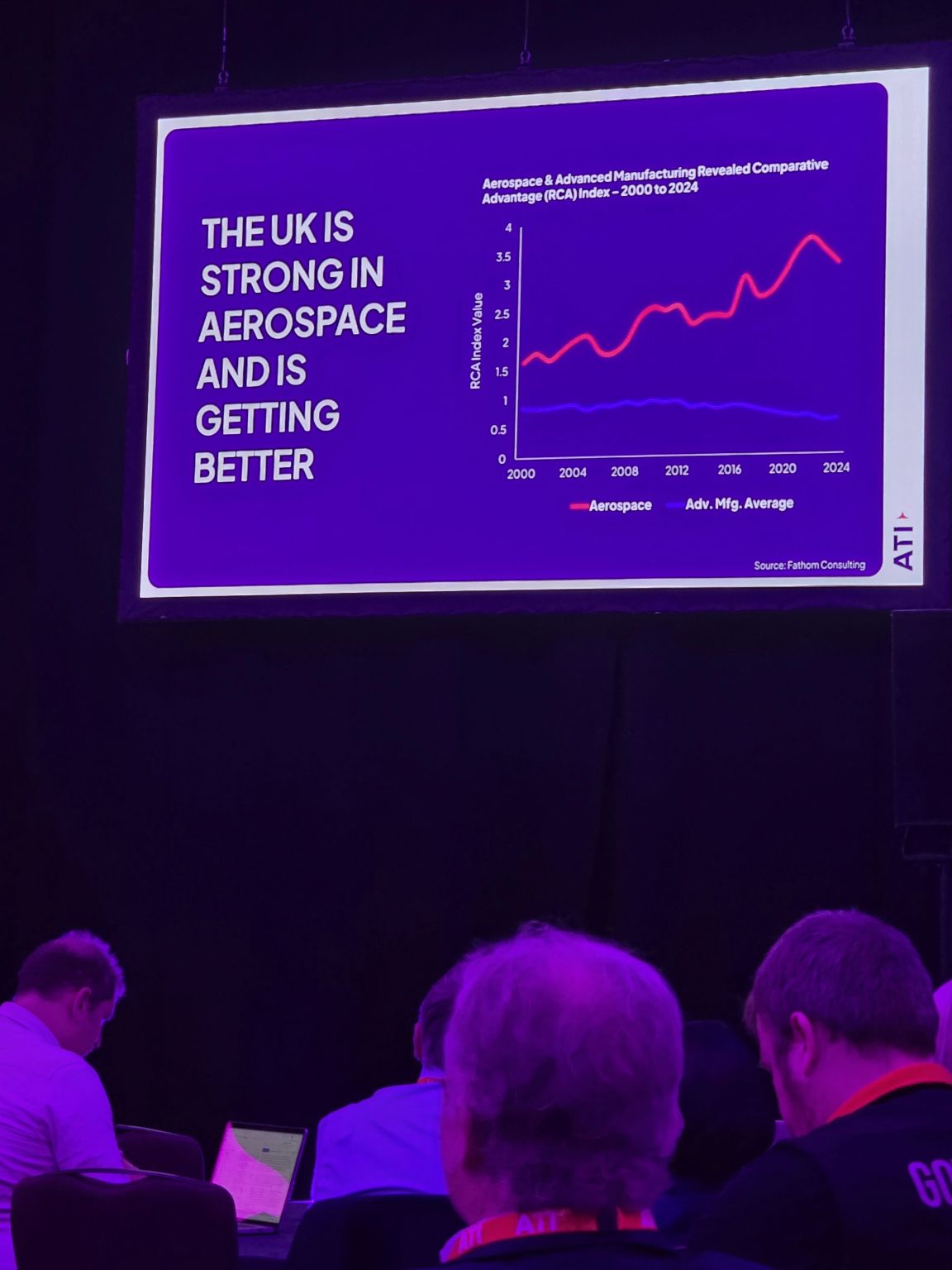
According to the Aerospace Technology Institute (ATI), the global aerospace assembly market is forecast to grow from approximately £28 billion in 2025 to £49 billion by 2035, with a potential £3.6 billion addressable market for UK industry associated with future ultra-efficient aircraft platforms.
The forecast underlines the importance of investment in advanced manufacturing, automation and digital technologies as British suppliers compete for work on future aircraft programmes.
Ben Anderson, Managing Director of AddQual, believes precision measurement, component qualification and manufacturing process verification will play an increasingly important role in securing that opportunity.
“The next generation of aircraft presents a significant commercial opportunity for British manufacturing. Our ability to demonstrate that complex components and assemblies can be produced accurately, consistently and at the required rate will be central to securing future work,” said Ben.
“Integrating measurement into the earliest stages of manufacturing development gives engineers greater visibility of how components behave throughout production. That understanding can influence everything from tooling design and assembly methods to production costs and long-term process reliability.”
Integrating precision measurement into aerospace manufacturing
Advanced aircraft designs, increasingly complex component geometries and demanding manufacturing tolerances are placing greater emphasis on the accuracy and consistency of aerospace assembly processes.
The dimensional accuracy of individual components has a considerable bearing on subsequent assembly operations, influencing production times, material utilisation, manufacturing costs and overall product quality.
Through its specialist aerospace inspection and metrology services, AddQual works alongside manufacturers to understand component variation, establish repeatable measurement processes and support the transition from development into production.
Its expertise in 3D scanning, dimensional verification, automated metrology and precision component inspection enables manufacturers to build a detailed understanding of component geometry and manufacturing performance.
“An assembly brings together the accumulated variation of multiple components and manufacturing processes. The earlier we understand that variation, the greater the opportunity to improve the overall manufacturing process,” Ben added.
“Accurate measurement data gives engineering teams the evidence they need to refine processes, improve first-time pass rates and establish the production capability required to deliver at scale.”
Accelerating aerospace component qualification through digital technology
The anticipated growth in aerospace assembly presents opportunities for manufacturers to improve the efficiency of their inspection and qualification workflows through greater digital integration.
AddQual is developing specialist software and digital engineering technologies to help manufacturers improve inspection reliability, increase productivity and make more effective use of engineering resources.
Its MiDAS metrology software forms part of the company's digital engineering offering, alongside ATLASQual, which is being developed to improve inspection planning, workflow visibility and the management of upstream manufacturing risks.
By connecting measurement data with engineering decision-making, AddQual's advanced manufacturing and digital engineering solutions support manufacturers throughout the component lifecycle, from new product introduction and qualification through to serial production and component repair.
“Inspection and qualification are important considerations when establishing the commercial viability of a new manufacturing programme. Improving the reliability of these workflows gives businesses greater confidence in their production schedules, engineering resource requirements and delivery commitments,” said Ben.
“Digital technologies provide an opportunity to bring greater visibility to these processes, helping engineering teams identify risks earlier and establish manufacturing capability more efficiently.”
Building Britain's aerospace manufacturing capability
With the global aerospace assembly market forecast to grow by approximately 76% over the coming decade, the ability to combine advanced manufacturing with efficient and reliable quality assurance could become an important competitive advantage for British suppliers.
AddQual's combination of specialist engineering expertise, advanced metrology services and digital inspection technologies supports manufacturers in improving process consistency, reducing scrap and rework, and accelerating the qualification of complex aerospace components.
The company's Nadcap accreditation for 3D structured light measurement further demonstrates its commitment to the rigorous quality and verification requirements of the aerospace industry.
“The opportunity identified by the ATI gives British industry a clear commercial incentive to invest in manufacturing capability today,” said Ben.
“By bringing measurement, manufacturing and engineering expertise closer together, we can help businesses establish more reliable processes, improve manufacturing yields and build the confidence to take on increasingly complex aerospace programmes.”
Find out how AddQual's specialist engineering services and digital manufacturing technologies can help your business improve inspection reliability, accelerate component qualification and reduce manufacturing costs.