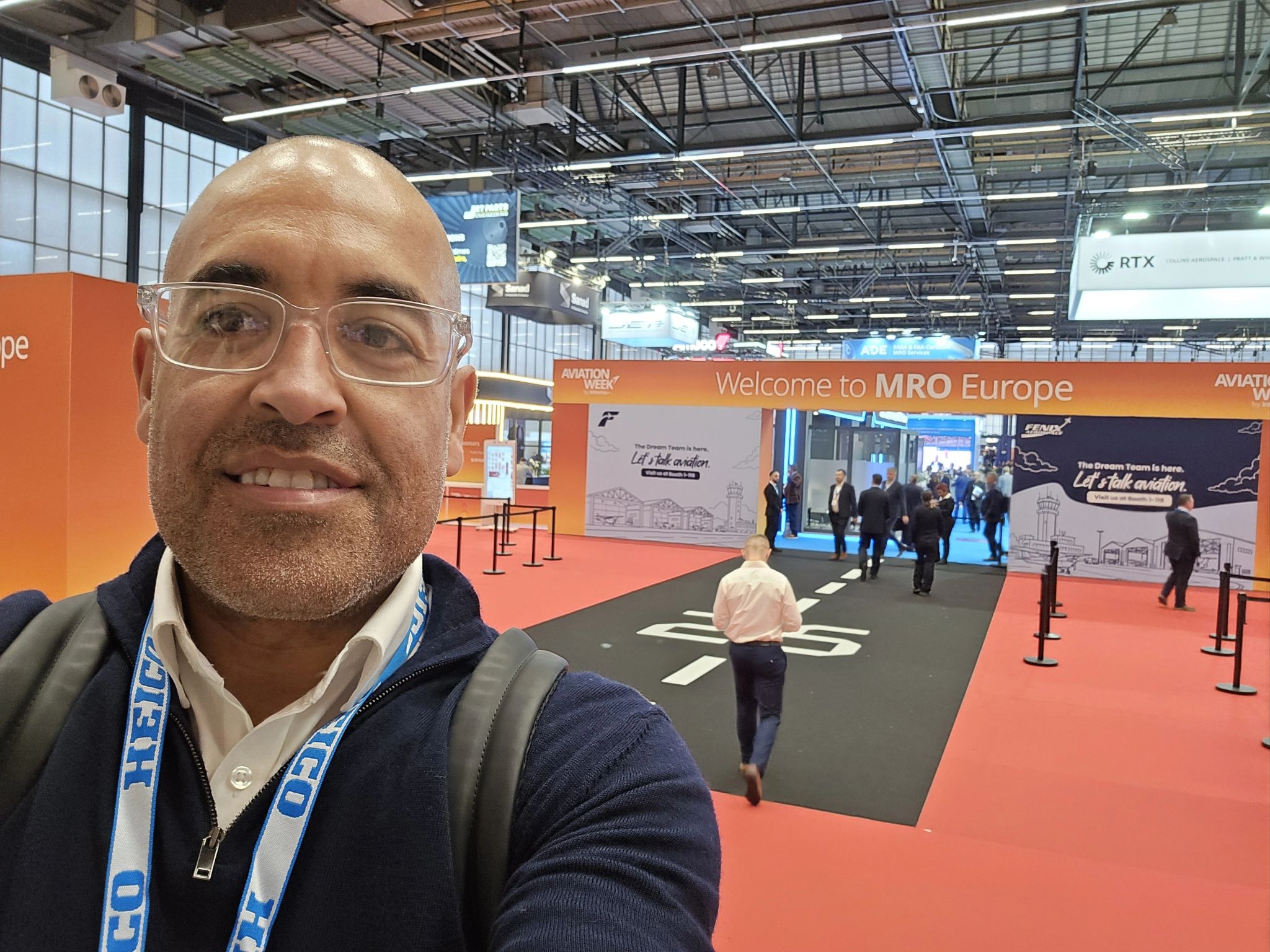
AddQual Managing Director Ben Anderson has returned from MRO Europe 2026 in Amsterdam with a positive outlook for the aerospace maintenance, repair and overhaul (MRO) sector, highlighting strong market demand alongside growing interest in digital technology, artificial intelligence and more efficient repair processes.
Held at the RAI Amsterdam from 27–29 October, MRO Europe brought together airlines, engine manufacturers, maintenance providers and technology specialists from across the global aerospace aftermarket.
For Derby-based AddQual, which specialises in aerospace inspection, quality verification and digital engineering solutions, the exhibition provided an opportunity to assess the challenges facing repair organisations and the technologies being developed to address them.
“The level of activity across the show was encouraging, and there is clearly a great deal of demand within the MRO sector,” said Anderson.
“What interested me most was how businesses are approaching that demand. Digital technology is becoming a bigger part of the conversation, and artificial intelligence is increasingly visible. There is a growing appetite for improving how repair operations manage information, make decisions and use their engineering resources.”
Skills and experience remain central to MRO growth
One of Anderson's main observations concerned the availability of experienced engineers and technicians, particularly as the aerospace aftermarket responds to increasing maintenance requirements.
“Skills and experience came up repeatedly during the show. There is a tremendous amount of knowledge within the industry, particularly among experienced engineers who understand complex components and repair processes,” he explained.
“As demand increases, businesses are looking at how they can make better use of that expertise. Digital tools have a valuable role to play in capturing engineering knowledge, improving consistency and allowing skilled people to concentrate on the work where their experience adds the greatest value.”
For AddQual, this closely reflects the company's approach to aerospace inspection and metrology services, which include Nadcap-accredited 3D structured light inspection, coordinate measuring machine (CMM) inspection, dimensional verification and inspection planning.
These capabilities support aerospace manufacturers and repair organisations in establishing reliable measurement processes, verifying complex components and producing the quality evidence required throughout the component lifecycle.
Making better use of repair data
Anderson also identified opportunities to improve the way information moves through aerospace repair chains, where inspection results, engineering assessments and repair decisions frequently involve several organisations and systems.
“Repair chains generate enormous amounts of valuable information, but there is still considerable scope to improve how efficiently that data is captured, shared and used,” he said.
“Every inspection and repair decision contributes to our understanding of a component. Bringing that information together in a more structured way could make a real difference to turnaround times, consistency and the decisions engineers are able to make.”
This is an area AddQual has been addressing through its MiDAS digital measurement and quality management platform, developed to connect inspection activity with engineering decision-making.
The platform supports digital inspection workflows, measurement data management, traceability and quality reporting, with complementary capabilities including ATLASQual for inspection planning and MiDAS MIND for rules-based decision support.
By maintaining structured inspection records and applying agreed acceptance criteria, these technologies help organisations make better use of existing measurement data and engineering resources.
AddQual's wider engineering capability and process improvement services also support manufacturers and repair providers seeking to improve first-time-pass performance, understand process variation and reduce scrap and rework.
An industry preparing for gradual change
Despite the growing interest in digitalisation and AI, Anderson believes the adoption of new technologies across aerospace MRO will be progressive, reflecting the industry's demanding regulatory requirements and established engineering practices.
“Aerospace is understandably careful about introducing change, particularly where safety, traceability and component acceptance are concerned,” he said.
“I expect the transition to be gradual. The most successful developments will be those that demonstrate a clear benefit to engineers and fit comfortably within existing quality and approval processes.
“For me, Amsterdam reinforced the opportunity for practical improvements. Better inspection data, more efficient workflows and greater visibility of repair activity are all areas where businesses can make meaningful progress.”
Anderson concluded that the exhibition had reinforced AddQual's commitment to supporting the aerospace aftermarket through the combination of specialist engineering knowledge and digital technology.
“There is plenty of confidence in the MRO market, and the conversations in Amsterdam suggest that businesses are increasingly interested in how they can improve their operations. It was a valuable opportunity to hear those perspectives first-hand and reflect on where AddQual can contribute.”
To learn more about AddQual's aerospace inspection services, MiDAS digital solutions and engineering capability support, visit www.addqual.com or contact the team to discuss your inspection and repair challenges.