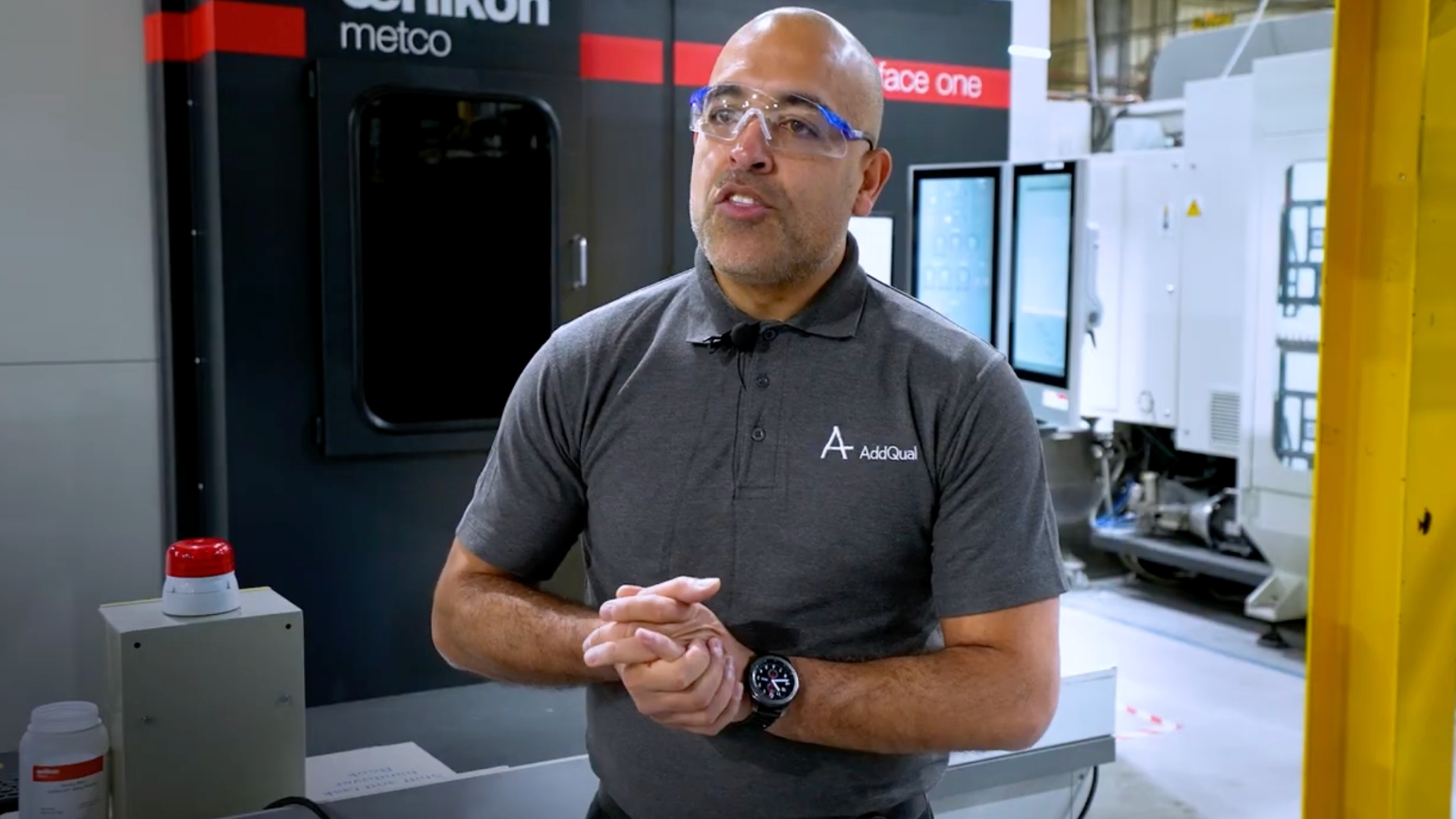
A collaboration between aerospace technology specialist AddQual and Turbine Repair Technologies (TRT) is demonstrating how digital twins, automated inspection and live process data can support a new generation of aerospace component repair. TRT, a joint venture between Rolls-Royce plc and Chromalloy UK, specialises in the inspection, repair and overhaul of gas turbine components. Working within a highly controlled aerospace environment, the business identified an opportunity to use digital technology to build greater intelligence into component inspection and repair decisions.
The resulting NATEP-supported programme brought TRT together with Derby-based AddQual to develop and demonstrate a repair digital twin capable of capturing information throughout the repair process and presenting it to engineers in a form that supports data-driven decision-making. For AddQual Managing Director Ben Anderson, the project provided an opportunity to translate the company’s expertise in metrology, inspection and digital manufacturing into a live aerospace MRO environment.
“Repair digital twins are fundamentally about making the information generated during a repair process available to the people who can create value from it,” said Anderson. “TRT gave us a real industrial environment in which we could demonstrate those ideas, receive feedback and develop technology around the decisions engineers and inspectors actually need to make.”
One focus of the programme was the inspection of Trent 700 high-pressure turbine components. The existing process involves detailed assessment against engine manual requirements, incorporating dimensional inspection and information from processes including fluorescent penetrant inspection. A complete inspection, assessment and generation of the associated repair documentation can take around an eight-hour shift.
Yet every component arriving for repair can have a different history and physical condition. The project explored how richer dimensional data could help TRT categorise incoming components according to their condition and direct them towards the most appropriate repair route. Instead of treating repair as a single pathway, digital inspection creates the potential to select processes based on the measured characteristics of each component. That intelligence can then extend beyond the individual part. By capturing comparable information across multiple repairs, TRT can develop a clearer picture of process capability, support engineering decisions and identify opportunities to continually refine repair instructions and routing.
“The real value comes when measurement stops being an isolated inspection activity and becomes part of the decision-making infrastructure,” Anderson said. “If you can understand the condition of a component when it enters the process, capture what happens to it throughout repair and connect that information together, you begin to create a digital thread. That gives engineers evidence they can use to make faster, more informed decisions.”
AddQual began the development by mapping TRT’s repair processes, stakeholders, data sources and information requirements. Workshops helped establish which data mattered at different stages of the value chain before the team developed software capable of capturing key information from process inception through to completion. The result is a digital environment through which stakeholders can see what is happening to components and use live process information to inform decisions. Automation formed another important part of the programme.AddQual developed a robotic pick-and-place system capable of handling multiple components through metrology scanning, supported by a human-machine interface. The system has been designed to operate for extended periods autonomously, while using data to estimate scanning requirements and programme duration.
Together, the technologies demonstrate how metrology automation and digital process management can complement skilled aerospace engineers and inspectors by giving them more accessible information and greater capacity to focus on engineering decisions. “Automation is most powerful when it is connected to useful data,” Anderson added. “Our objective has been to bring metrology, software and process knowledge together so the system understands more about the component and the repair journey. That is where we see significant potential for aerospace MRO.”
NATEP support enabled AddQual to commit significant development resource to the programme, including new people, skills and technologies. Around eight person-years of development effort have been invested across the project as concepts progressed from early process mapping into software, collaborative robotics and a functioning demonstrator. The programme has also created a platform for further development.AddQual is now working with TRT to explore how the technology can deliver additional value within its operations, while examining opportunities to capture more information downstream in the repair process. The longer-term ambition includes developing elements of the technology towards a software-as-a-service model, creating an increasingly intelligent, efficient and autonomous approach to managing inspection and repair data.
Anderson believes the TRT programme demonstrates a wider opportunity for digitalisation across aerospace MRO.“Aerospace repair generates incredibly valuable information at every stage,” he said. “This project demonstrates what becomes possible when that information is captured, connected and made available in the right way.
“Working with TRT has allowed us to take the repair digital twin from an idea into a functioning industrial demonstrator. The next stage is about exploitation: taking what we have proved, creating further value for TRT and applying that learning to the wider aerospace MRO market.” For an industry focused on increasing MRO capacity and making the most effective use of specialist engineering skills, the project provides a practical demonstration of how digital inspection can become much more than measurement. By connecting component condition, metrology, repair routing and process performance, AddQual and TRT are building a foundation through which every inspected component can contribute data to the decisions that follow.


