Rising aircraft engine production and strong financial results across the aerospace industry are bringing renewed attention to the inspection, verification and qualification capacity required to sustain higher manufacturing rates, according to Derby-based engineering specialist AddQual.
Recent trading updates from GE Aerospace, RTX and Northrop Grumman have highlighted the strength of demand across commercial aviation and defence. GE Aerospace continues to address the requirements of increasing engine production, while RTX and Northrop Grumman have raised their 2026 profit forecasts, supported by strong order books and sustained activity across their respective markets.
For manufacturers throughout the aerospace supply chain, these developments point towards a prolonged period of production growth, accompanied by increasing demands on engineering resources and quality assurance.
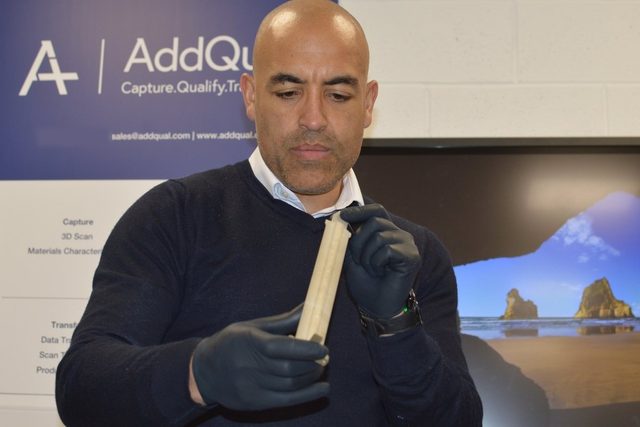
AddQual Managing Director Ben Anderson believes inspection capacity deserves particular attention as manufacturers invest in additional production capability. “Every increase in manufacturing output creates a corresponding requirement for inspection and verification. More components moving through a factory means more dimensional inspection, more engineering records and more decisions about whether parts are ready to progress,” said Anderson.
“Manufacturers are investing heavily in production capacity, and there is a considerable opportunity to improve how the inspection activity supporting that investment is planned and managed.”
The challenge is particularly relevant to aerospace manufacturers operating complex inspection programmes, where coordinate measuring machines, specialist metrology engineers and qualified inspectors must accommodate competing production priorities. Inspection departments frequently manage work across multiple programmes, with capacity affected by staff availability, equipment utilisation, rework and changing delivery schedules.
Anderson believes greater visibility of these resources can improve throughput and provide manufacturers with more reliable production commitments.
“A manufacturer might have six inspectors available, but that tells you relatively little about the work the department can complete during a particular week. You need to understand their skills, the hours genuinely available, the equipment required and the commitments already made. “When you bring that information together, you can make much better decisions about where work goes and when it can be completed. That becomes increasingly valuable as production rates rise.”
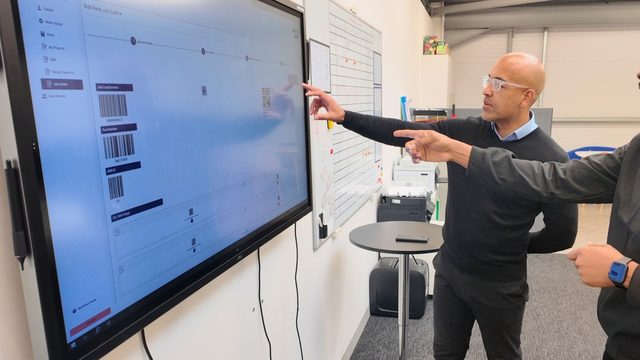
AddQual has applied this thinking to the development of ATLASQual, its inspection planning and traceability platform, which brings together job scheduling, resource availability and inspection records.
Developed from the company's own experience of managing inspection programmes, the system enables teams to plan work against available capacity, identify potential scheduling conflicts and retain a record of inspection activity as jobs progress. The approach also allows quality managers to identify recurring concerns and rework patterns, supporting improvements in first-time pass rates and reducing the engineering hours absorbed by repeated activity.
Alongside inspection planning, AddQual is developing its wider digital capabilities to help manufacturers make greater use of the information generated throughout component inspection, qualification and repair. Its MiDAS technology supports digital inspection and traceability, connecting measurement information with the engineering records required to assess component condition and support subsequent decisions.
The company's work with Turbine Repair Technologies, a joint venture between Rolls-Royce and Chromalloy, has demonstrated the application of digital inspection data and digital twin technology within aerospace component repair.
Anderson sees considerable potential for this approach as engine manufacturers and maintenance providers respond to increasing demand.
“Manufacturers already collect enormous quantities of inspection data. The real opportunity is turning that information into engineering confidence. “If you can understand where a process is drifting, recognise recurring defects and use previous inspection results to inform the next decision, you can improve the consistency of the process and reduce the time spent on scrap and rework.
“That applies to new component manufacture and equally to the repair of components already in service.”
With aircraft and engine manufacturers working towards higher production rates, Anderson expects the organisation of inspection and qualification activity to become an increasingly important consideration throughout the supply chain.
AddQual combines practical inspection and verification services with digital technologies developed around the requirements of aerospace engineering teams. Its AS9100-certified quality management system and Nadcap accreditation provide the foundation for work in highly regulated manufacturing environments.
“The aerospace industry has a substantial opportunity ahead of it, and suppliers are making important investments to support that growth,” Anderson concluded.
“Inspection and qualification are integral to how effectively those investments translate into delivered components. Better planning, greater process visibility and stronger use of engineering data can help manufacturers increase throughput while maintaining the standards their customers expect.
“For us, the focus is on helping engineering teams make the best use of the capacity they already have, understand their processes more clearly and build the confidence to take on additional work.”