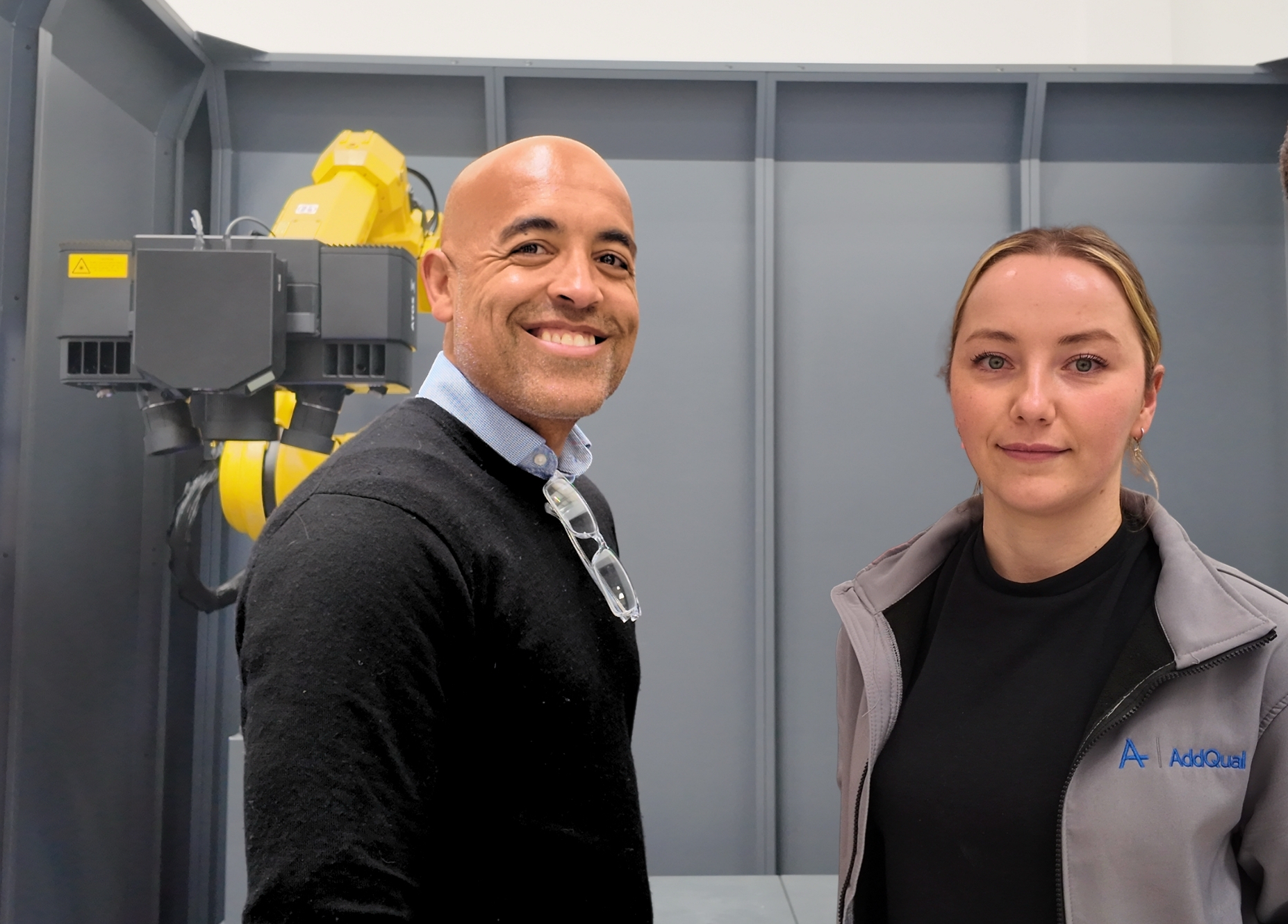
Britain has an opportunity to turn its aerospace engineering strength into a much larger share of the global maintenance, repair and overhaul market by accelerating investment in digital inspection, automation and AI, according to AddQual. The Derby-based aerospace technology specialist believes the growing focus on MRO represents an important opportunity for UK companies capable of combining engineering expertise with the digital technologies required to process components faster and make greater use of the data generated throughout their lifecycle. The scale of the opportunity was highlighted recently by the National Manufacturing Institute Scotland (NMIS), which estimates that the UK accounts for around 13% of global aerospace original equipment supply chains, compared with approximately 3% of the global MRO market. With the worldwide MRO sector now estimated to be worth around $127bn, increasing Britain's participation could create significant value across aerospace manufacturing, engineering and technology. For AddQual Managing Director Ben Anderson, the opportunity centres on productivity.
“The UK already has exceptional aerospace engineering capability, an established MRO footprint and generations of knowledge within the sector,” said Anderson. “Digital technology gives us the opportunity to amplify that capability .If we can remove time from inspection, qualification and engineering decision-making, each facility can process more work with the skills, equipment and expertise it already has. That creates a very powerful productivity opportunity for UK MRO.”
Building the intelligent MRO environment
NMIS has called for greater focus on the development of the “intelligent hangars of the future”, where digital and data capabilities are embedded within MRO operations. It is an area that aligns closely with AddQual’s technology strategy. At the centre of that strategy is MiDAS – AddQual’s Manufacturing Inspection Digital Automation System – which is being developed to connect inspection activity, measurement data and engineering decision-making within a digital workflow. Rather than viewing inspection as an isolated stage, AddQual sees an opportunity to create a continuous digital thread around the component.Inspection results can be captured and structured digitally, automated workflows can move information between processes and engineers can access the evidence required to make repair and qualification decisions more quickly. AI adds another layer of capability by helping organisations interpret growing volumes of manufacturing and inspection information.
“The intelligent hangar is ultimately an information environment as much as a physical one,” Anderson added. “ Every component moving through MRO generates valuable information. Measurement data, inspection results, repair history and engineering decisions all contribute to understanding that component. MiDAS is about creating the digital infrastructure that allows that information to flow. AI then creates an opportunity to extract more value from it, supporting engineers with faster access to relevant knowledge and helping organisations make consistent, evidence-led decisions.”
From inspection to repair digital twins
AddQual is already applying this approach within aerospace component repair. Its work with Turbine Repair Technologies (TRT), a joint venture between a major aerospace engine OEM and Chromalloy, has explored repair digital twins and the use of digital technology to inspect gas turbine components. The programme provides a practical example of how physical inspection and digital information can become increasingly connected during the repair lifecycle. For AddQual, digital twins also form part of a broader commercial strategy encompassing digital inspection, repair NPI, managed digital services and subscription technologies including MiDAS, MiDAS MIND and AtlasQual. This creates the potential for aerospace organisations to retain and reuse knowledge generated during inspection and repair rather than treating each engineering decision as an isolated event.
Turning skills into scalable capability
The productivity opportunity is reinforced by the industry's requirement for skilled people. Boeing estimates that 710,000 new aircraft maintenance engineers will be required globally during the next two decades. Anderson believes digitalisation can help existing expertise travel further by capturing engineering knowledge and embedding it within repeatable processes.
“The future of aerospace MRO combines skilled people with increasingly capable digital tools,” he said. “ An experienced engineer carries enormous knowledge. Our opportunity is to give that engineer better information, automate the activities that consume their time and capture knowledge so that it can support the wider organisation. That means highly skilled people can concentrate their expertise where it creates the greatest value.”
Capturing more MRO value in Britain
With existing aerospace clusters in Scotland, Wales, the Midlands and across the wider UK, AddQual believes Britain already possesses many of the ingredients required to grow its share of the international aftermarket. The next stage will increasingly centre on connecting physical engineering capability with automation, metrology, digital twins and AI. For Anderson, that creates an opportunity extending beyond servicing the current generation of aircraft.
“MRO can become a source of competitive advantage for UK aerospace,” he concluded. “We have the engineering heritage, the people and a major aerospace supply chain. By combining those strengths with digital qualification, automated inspection and AI, we can create MRO capacity through productivity and build technology that can be deployed internationally. The opportunity is to make Britain one of the places where the intelligent MRO environment is developed, proven and scaled.”
As aircraft remain in service for longer and global MRO demand continues to expand, the countries capable of combining engineering capability with digital productivity are well placed to capture that growth. For AddQual, the opportunity is clear: help make every inspection faster, every engineering decision better informed and every hour of specialist aerospace expertise more productive.


