As manufacturers face growing pressure to increase production, accelerate qualification and maintain consistency across increasingly complex supply chains, the importance of internationally recognised standards continues to grow.
World Standards Day, marked annually on 14 October, recognises the contribution of standards to safety, reliability and international cooperation. Organised by the International Organization for Standardization (ISO), International Electrotechnical Commission (IEC) and International Telecommunication Union (ITU), the occasion highlights the systems and principles that underpin industrial confidence worldwide. For Derby-based AddQual, whose business has been built around quality, inspection and engineering verification, the occasion carries particular significance.
The company's work across aerospace and advanced manufacturing is founded on the ability to establish, measure and demonstrate conformity. Its Nadcap-accredited inspection capability and AS9100 quality management certification reflect the rigorous requirements of an industry in which every component must meet precisely defined specifications. AddQual Managing Director Ben Anderson believes standards play an important role in helping manufacturers develop the confidence and capability to grow.
“Standards are fundamental to the way aerospace manufacturing operates. They provide a common understanding of what is required, how it should be measured and how conformity can be demonstrated,” said Anderson.
“When you're dealing with high-value components and complex engineering processes, the quality of the evidence is every bit as important as the quality of the finished component. Customers need confidence in the measurements, the inspection process and the decisions that follow.”
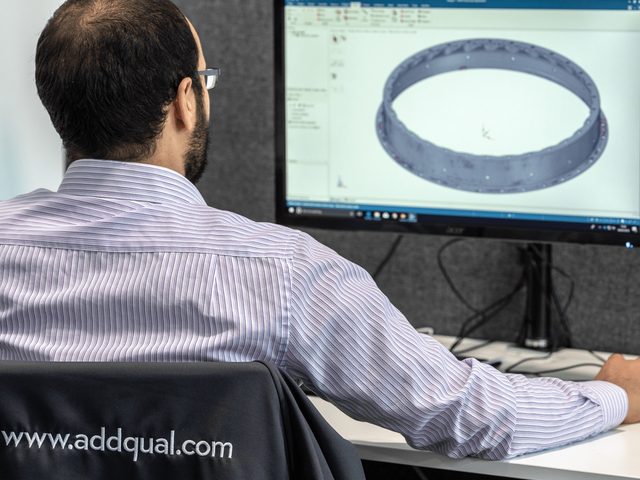
AddQual's inspection and qualification services support aerospace OEMs, MRO providers and power generation specialists working to demanding technical requirements. That includes the qualification standards of leading aerospace and power generation businesses, as well as AS9102, the industry standard for First Article Inspection reports. Its expertise spans 3DSL automated systems, CMMs and mobile hand scanners, as well as general hand gauges such as verniers and calipers.
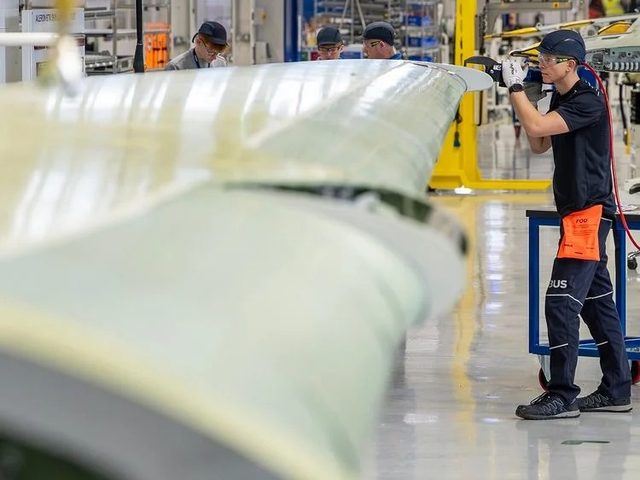
These activities form an important part of the manufacturing approval process, providing the evidence required to establish that components and production processes meet their intended specifications. As aircraft manufacturers and engine producers increase production, the volume of associated inspection, verification and documentation activity is also growing.
For Anderson, this presents an opportunity to examine how established quality practices can benefit from advances in digital technology.
“There's a great deal of engineering knowledge involved in qualification and inspection. The challenge is making that knowledge available consistently, particularly when manufacturers are managing multiple programmes, suppliers and production facilities.
“Digital systems allow us to capture information closer to the point of measurement, apply established engineering rules and build a more complete record of how a component has been assessed. That has real value for the people responsible for quality and for the customers relying on their work.”
AddQual's development of its MiDAS (Measurement Intelligence Data and Analytics System) platform reflects this approach.
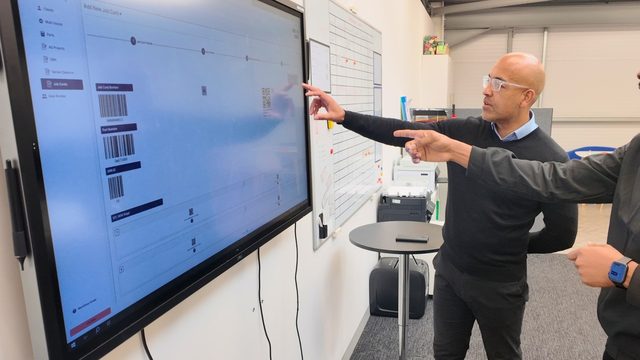
Designed to connect inspection data with engineering workflows, MiDAS provides a digital foundation for measurement capture, component traceability, automated reporting and quality decision-making.
The platform is being developed around modular capabilities that address different aspects of the inspection and qualification process.
ATLASQual supports qualification planning and the coordination of inspection resources, while MiDAS MIND focuses on applying engineering rules and intelligence to measurement data. MiDAS PLANT extends the concept towards greater visibility of inspection and quality activity across manufacturing facilities.
Together, these capabilities reflect AddQual's ambition to make quality information more accessible and useful throughout the manufacturing process. Anderson sees considerable potential in the relationship between established standards and the increasing use of automation.
“An inspection standard provides the framework, but manufacturers still need to translate that into thousands of individual activities and decisions,” he explained.
“There's an opportunity to make those processes more efficient through automation, particularly where engineering rules can be applied consistently and the supporting evidence captured automatically.
“That gives quality engineers more time to concentrate on the areas where their expertise adds the greatest value, while helping businesses manage the increasing volume of qualification work.”
The importance of verification also extends into aerospace maintenance, repair and overhaul, where decisions about component condition and repair suitability depend on accurate measurements and detailed engineering records.
AddQual's work with Turbine Repair Technologies (TRT), a joint venture between Rolls-Royce and Chromalloy, has explored the application of digital twin technology to turbine component inspection and repair.
By connecting measurement information with repair processes and engineering decision-making, the collaboration has demonstrated how digital records can support more consistent assessment and provide greater insight into component condition. The work forms part of AddQual's wider development of digital inspection and repair technologies, including its REPLENISH programme.
“Repair is an interesting area because every component arrives with its own history and condition,” Anderson said.
“The engineering decisions need to be supported by reliable information, and there is considerable value in retaining that knowledge throughout the repair process.
“As digital inspection and repair technologies develop, the ability to demonstrate why a particular decision was made becomes increasingly valuable. Traceability supports the confidence that manufacturers, repair organisations and their customers need.”
World Standards Day also provides an opportunity to recognise the contribution of quality professionals, inspection engineers and metrology specialists whose work supports the wider manufacturing industry.
For AddQual, the continuing development of digital quality systems builds on the principles that have long governed aerospace manufacturing: accurate measurement, repeatable processes, documented evidence and accountability. With production rates increasing and manufacturers investing in new capabilities, Anderson believes these principles will remain central to industrial competitiveness.
“Quality is ultimately about confidence. When a manufacturer can demonstrate that its processes are controlled, its measurements are reliable and its decisions are supported by evidence, that creates confidence throughout the supply chain.
“World Standards Day is a useful reminder of the importance of the people and processes behind that confidence. At AddQual, it's something we work with every day, through our inspection services and the technology we're developing to support the future of manufacturing.”
AddQual continues to support aerospace and advanced manufacturing organisations through its accredited inspection and qualification services, MiDAS digital quality platform and specialist digital twin and repair solutions.